
What training do you need before working with a laser?
A professional laser produces no result on its own — the practitioner who knows how to control it does. That is why "what training do you need before working with a laser?" is one of the most important questions future practice owners ask. In this article we set out in detail what actually has to be learned, what training looks like with us, and how to prepare so that your first day with real clients goes confidently.
Why training is not a formality
Laser hair removal is a safe treatment when a trained person carries it out. In the practitioner's hands are the decisions that determine both the result and the client's safety: assessing skin type, choosing settings for the thickness and colour of the hair, the correct technique with the handpiece, eye protection, recognising contraindications. You will not learn any of that from videos — it takes practice on a real device with an experienced mentor who corrects mistakes on the spot.
Training matters in a legal sense too: a client entrusts their skin to you, and you must be able to demonstrate your competence. On completing our course you receive an international certificate — a document you can show both clients and partners.
What the training covers: the programme from the inside
Our training is individual (for one or two people), takes one intensive day, and when you buy a device it is included in the price. The programme covers two blocks:
Theory
- how a laser works: wavelength, energy, pulse — explained clearly, without unnecessary academic language (you can revisit the basics in our article on laser wavelengths);
- skin types and how to assess them, the phases of hair growth, and why treatments are carried out as a course;
- contraindications and the cases where a treatment must not be performed;
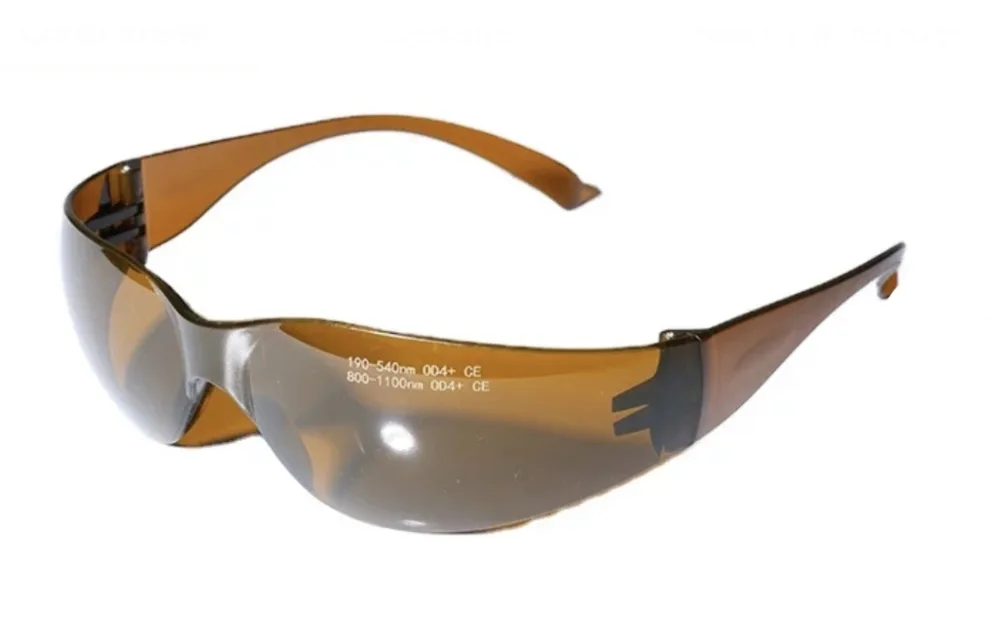
- safety requirements: eye protection, preparing the room, hygiene at work;
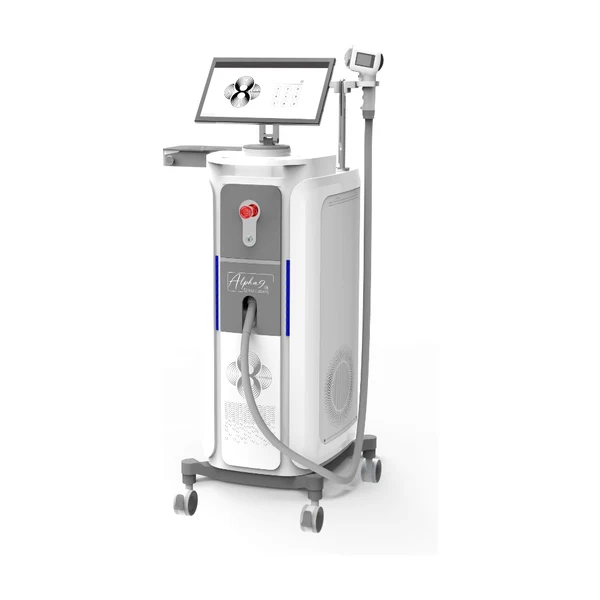
- how the device is built, its daily maintenance, and what to do when a warning appears (the full list is in our maintenance guide).
Practice
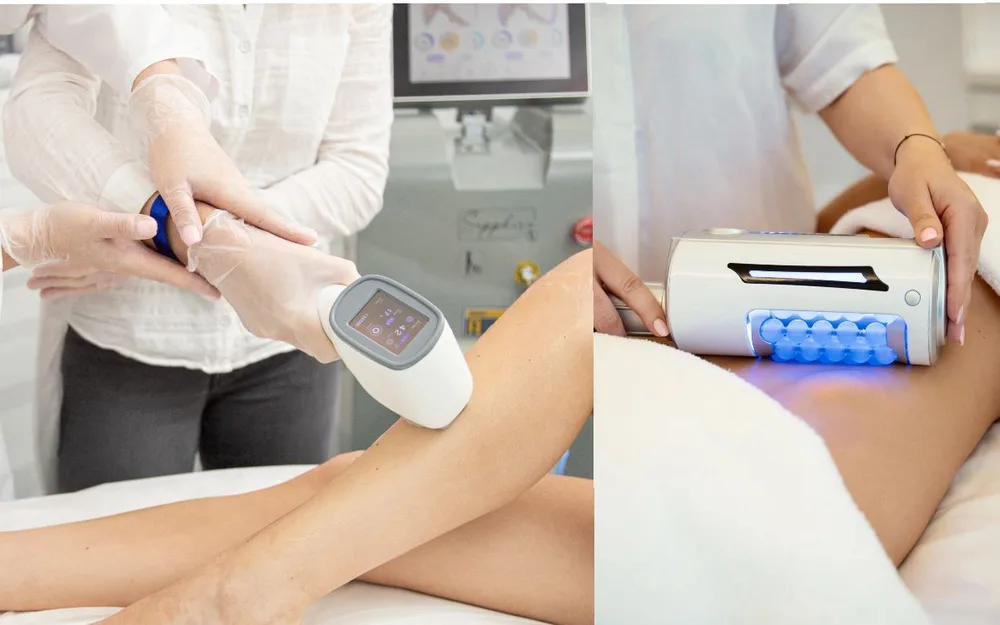
- working with a real device: choosing settings, handpiece technique, the sequence of areas;
- treatments carried out on a model you bring (underarms, bikini or legs, for example) — we recommend inviting someone close to you who will feel comfortable;
- advising the client: how to assess expectations, explain the sensation (our article on what a treatment feels like is useful in practice) and put together a treatment plan.
You leave the course with more than skills: you receive all the training materials, an international certificate and — by tradition — a group photograph.
When to train: before or after buying the device?
Both routes are possible, and each has its own logic:
- The standard route. You order the device and, while it is on its way to you, come for training at a time that suits you, arranged in advance — weekends included. When the device arrives you are ready to work from day one.
- The cautious route. Would you rather get a feel for the profession first? You can complete the training before ordering a device — the course costs €800, and that fee is refunded if you buy a device within a month of the training. It is a safe way to confirm that this work suits you without risking the investment in training.
For a growing business it also matters that training each additional member of staff costs €400, and that practice can be refreshed later at €100 an hour (minimum two hours). All the terms are on the page "How working together goes".
Safety: what every practitioner must learn
The safety block in the training is not a formality. The essentials that must become second nature:
- Eye protection. The practitioner works in protective goggles and the client's eyes are covered — for facial areas, steel eye shields are used;
- Preparing the skin, and hygiene. Single-use items — razors, gloves — and proper disinfection are the foundation of professionalism;
- Recognising contraindications. A practitioner must know when a treatment cannot be done, and be able to tell the client so tactfully;
- Monitoring the device's condition. Work only with a device in good order and properly maintained — a warning signal always means a pause.
After the training: support in the first months
A certificate in hand is not the end. The real questions come up in the first weeks of work with real clients: "were those the right settings for this skin type?", "how should I handle this situation?". So for three months after delivery we provide free telephone support — call freely, that is what it is for. And if you later want to refresh your practice or train a new member of staff, we are here.
Incidentally, the training is not limited to hair removal: it accompanies our whole equipment catalogue — from electrolysis to tattoo removal and body treatment devices.
A training day up close: how it looks
So that you know what to expect, here is how a training day at our Kaunas studio usually unfolds:
- Morning — theory. Over a cup of coffee we work calmly through the basics of the technology, assessing skin, contraindications and safety. You can ask questions at any moment — the training is individual and the pace is set by you;
- Midday — getting to know the device. You learn your model from the inside: controls, settings, daily maintenance, working with gel, handpiece technique on a practice surface;
- Afternoon — practice on a model. You carry out real treatments on the person you have brought: from consultation and skin assessment to treating a full area. The trainer is beside you, correcting your movements and commenting on your choice of settings;
- Closing — the round-up. We go through your questions, and you receive the training materials, an international certificate and — by tradition — a group photograph.
The typical beginner mistakes we correct in training
Across many courses we see the same recurring things — and it is precisely why live practice cannot be replaced:
- Settings that are too cautious. Out of nervousness beginners choose minimum values — the treatment is "safe" but ineffective. We teach how to find the balance for the skin and hair type;
- Uneven handpiece movement. Missed patches and overlaps are visible only to an experienced eye — we drill the correct movement until it is automatic;
- Rushing the consultation. Assessing the skin and discussing the client's expectations is not a formality but the foundation of the result;
- Economising on gel. A small thing with a large effect — more on that in our article on cooling;
- Ignoring maintenance. We teach not only how to work but how to look after the device — the checklist becomes part of your day from day one.
A competence plan after the certificate: 30 / 60 / 90 days
The certificate is a start, not a finish. We recommend this run-up plan:
- The first 30 days. Work with people you know and with models, write down your questions at the end of each day and call us — the support is free. The goal: confidence with the main areas;
- Days 30–60. Widen the range of areas, start working with more varied skin types, polish your consultation skills. The goal: a full service menu;
- Days 60–90. Analyse your results: client retention, how courses progress, the questions that come up most. The goal: consistent quality and confidence in your own decisions.
After 90 days most practitioners feel entirely independent — and if you ever want to refresh your skills or learn to work with new equipment (an electrolysis device, for example), refresher practice is always available at €100 an hour.
What the training does not cover — and where to learn that
In fairness: a one-day technical course cannot, and should not, cover everything a business needs. Here are the areas worth planning separately:
- The business side. Pricing, budgets, payback — our guides on start-up costs and on payback are written for that, and we discuss individual questions in consultations;
- Marketing. Running social media and attracting clients is a craft of its own; to begin with, consistency and authentic content from your own practice are enough;
- Medical questions. We teach how to recognise contraindications and the situations where a client should be referred to a doctor — but making diagnoses is not, and cannot be, a beauty practitioner's role;
- Legal registration. The form of your business and hygiene requirements — check these with the responsible authorities; we will share our clients' practical experience, but it does not replace official advice.
That clarity about boundaries is part of professionalism too: it is good to know what you can do, and better still to know what you cannot do yet.
Learning does not stop: your sources of knowledge
A certificate opens doors, but what makes a professional is continuing curiosity. What we recommend after the course:
- follow our knowledge centre — every article is written for practitioners, from the physics of the technology to equipment maintenance;
- keep notes on your own cases — observations about skin types and settings become a personal reference book within a few months;
- use the support line — a question asked in time is a form of learning, not a sign of weakness;
- plan refresher practice when you widen your services or take on a team.
The essentials at a glance
- A safe start needs theory, live practice and a mentor — videos are no substitute;
- Buy a device from us and individual training (for one or two people) is included in the price, with an international certificate on completion;
- You can also train before buying: the €800 fee is refunded if you buy a device within a month;
- Skills settle fully during the first weeks — which is what the free telephone support is for;
- Training accompanies the whole equipment catalogue, not only hair removal lasers.
Frequently asked questions
Is a medical qualification required?
A medical degree is not required to carry out beauty treatments, but the requirements for the activity can differ according to the nature of the services — it is worth checking them with the public health authority. During a consultation we will share how our clients handle these questions.
Is one day of training enough?
One intensive day is enough for a safe start, because the training is individual — all the attention is on you. The skills settle fully during the first weeks, and you can call for advice throughout. Practice can always be topped up if needed.
Can I come with a colleague?
Yes — the standard course is designed for one or two people at no extra charge. For a third and any further staff, the price is €400 per person.
Where does the training take place?
At our studio in Kaunas (Puodžių g. 10-4) — where you can also see and compare the devices in person. Times are arranged individually, weekends included.
Does the certificate apply to other devices too?
The foundation of the skills is universal, but every device has its own control specifics — so when changing equipment we recommend at least a short refresher on the new model. For our clients that is simple: an hour of refresher practice costs €100, and for those already working with our equipment a phone consultation is often enough.
Can I train if I have no experience in the beauty sector at all?
Yes — the individual format lets you start from zero: we set the pace to suit you, and the practical part lasts as long as a confident start requires. A good number of our clients came from entirely different fields and work successfully today. The most important quality is thoroughness and a willingness to learn; everything else is a matter of method and practice.
Planning your launch? Get in touch — we will arrange a training date and answer all your questions. And if you are still choosing a device, start with the selection guide. We arrange training times flexibly, weekends included, so you can start without interrupting your current working routine. The best first step is simply to call and talk it through: on +370 620 66666 we will answer everything about the programme, the dates and how to prepare, before you commit to anything.