
How to choose a professional hair removal laser
A professional hair removal laser is one of the biggest investments a beauty salon or aesthetics practice makes. That decision governs not only the quality of your treatments but how quickly the investment pays for itself, how many clients you can see in a day, and how you will feel a year from now — pleased with a reliable working tool, or counting downtime and repair bills.
In this guide we go step by step through everything worth assessing before you buy: from laser technology and power to training, warranty and the reliability of your supplier. It is based on the practical experience we have built up advising practitioners and helping them start a laser hair removal business.
Where to start: not with the device, but with the business plan
The most common mistake is to choose the device first and think about clients afterwards. The right order is the reverse. Before you look at technical specifications, answer a few questions for yourself:
- Who are your clients? Will you work with a broad audience, or specialise (men's hair removal, sensitive skin)?
- What volume do you expect? How many clients a day at the start, and how many after a year — that determines the power and throughput you need.
- What is your space? A permanent room lets you choose a powerful stationary device; a rented space or mobile services call for a compact solution.
- What is your budget? Include not only the price of the device but consumables, marketing and working capital for the first few months.
Once those answers are clear, the technical criteria fall into place much more easily. If you want to check your own numbers, use our payback calculator — it will help you judge what price of equipment is realistic for the volume you are planning.
Type of laser: why professionals choose diode
Salons today most often use diode lasers, which have become the standard for professional hair removal for several reasons. Diode technology works across a wide range of skin types, the devices are long-lived, and the cost per treatment is among the lowest on the market. Compared with older technologies, diode lasers are faster and more comfortable for intensive daily work.
We have written about the differences between technologies in more depth in the article "Diode vs alexandrite laser", and we cover wavelengths in detail in the guide "755 nm, 808 nm and 1064 nm: how do laser wavelengths differ?".
Power and handpieces: what determines working speed
Treatment time is one of the most important business metrics: the faster you can carry out a treatment properly, the more clients you can take in a day. Speed comes down to the power of the handpiece and the size of its window. A large window lets you cover legs or a back quickly; a small one lets you work precisely on the face, underarms or bikini area.
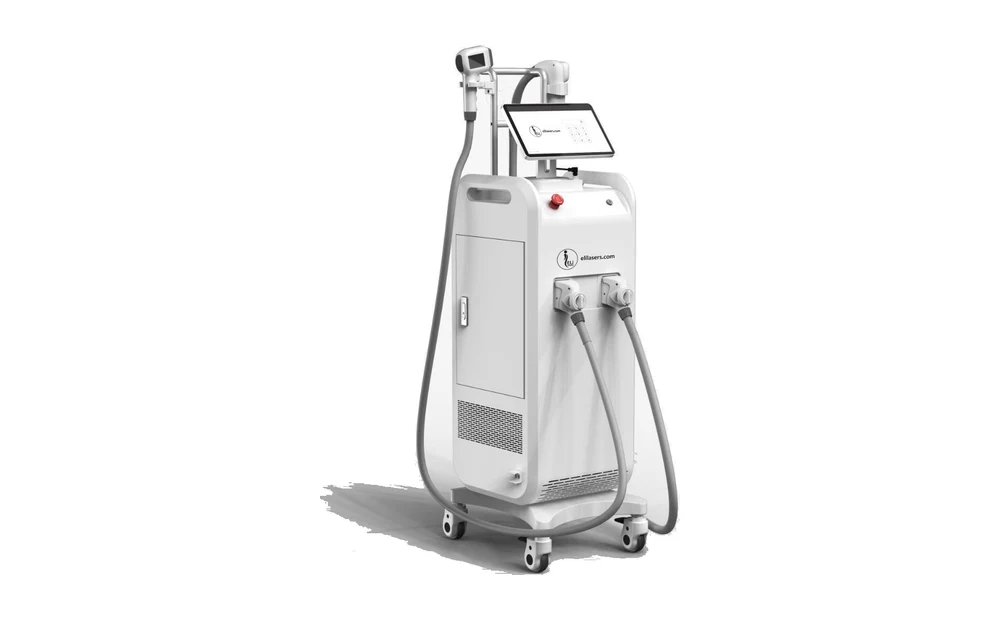
Our flagship CLens, for example, has two specialised handpieces: a powerful 1200 W handpiece with a large 15×40 mm window for fast work on large areas, and a 600 W handpiece with a small 12×12 mm window for precise work on sensitive areas. In practice that means one device covers the whole range of treatments without compromise.
The cooling system — the foundation of comfort and safety
A good contact cooling system actively chills the surface of the skin during the treatment, so the client feels only minimal discomfort and the skin is protected from overheating. That has a direct effect on whether clients come back: a treatment that causes no unpleasantness is your best advertisement.
When choosing a device, ask what cooling technology it uses and how that technology is maintained. Our devices use an advanced sapphire contact cooling system. We have given the subject its own article — "The laser cooling system: why it matters for treatment comfort".
Stationary or portable?
The answer depends on your working model:
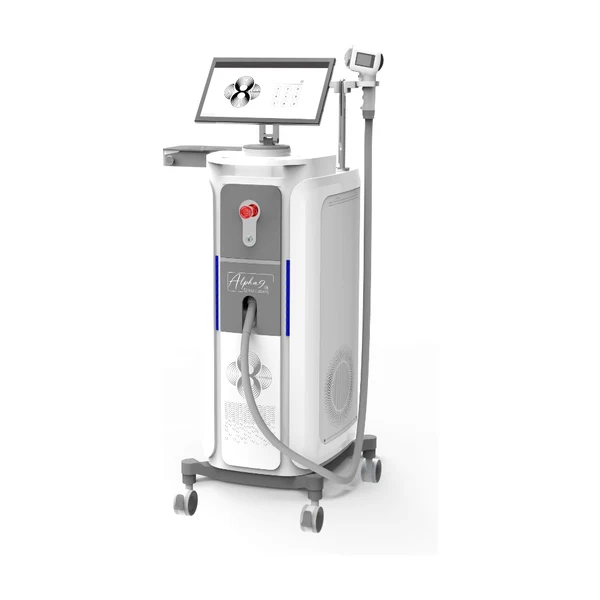
- A stationary device is the best choice for a practice with steady volume: more power, more throughput and greater durability under intensive work. CLens and the laser with built-in artificial intelligence are both of this kind, as is ALPHA9™ AI Skin, which additionally scans the skin and proposes treatment parameters before you start.
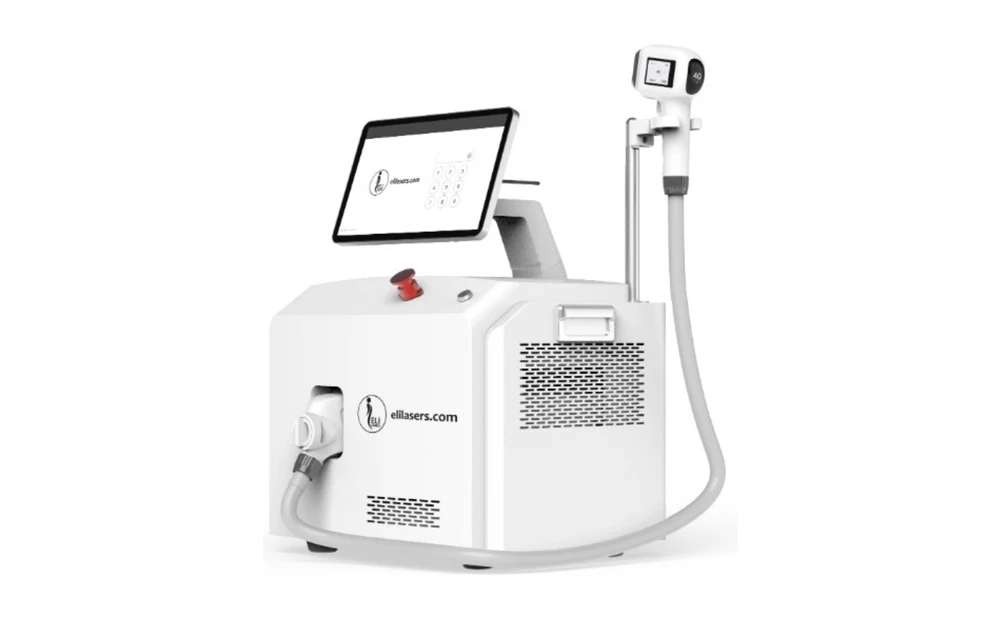
- A portable device suits those starting out, working in several locations or in a rented space. Portable DI weighs and costs less, and it is entirely sufficient to begin with.
It is worth being clear: a portable device is not "inferior" — it is a different tool for a different business model. Many of our clients started with a portable device and bought a stationary one once their volume grew.
New technology: what artificial intelligence adds
The latest generation of devices includes built-in AI cameras that help the practitioner choose treatment settings. Our laser with built-in AI is an example of that direction: the technology makes daily work easier and reduces the risk of human error, especially where several practitioners of differing experience share one device.
What to ask a supplier: a checklist
The device is only half the decision. The other half is the supplier you will be working with for years. Before signing anything, make sure you know:
- Training. Is it included in the price? Who delivers it and how much of it is there? With us, individual training with hands-on practice is included in the price of the device — more about training.
- Installation. Who assembles and commissions the device? Our technician comes to you; connecting the device yourself is not permitted, which protects both the equipment and the warranty.
- Warranty and service. Where is the device repaired, and how quickly? Is the supplier a direct representative of the manufacturer?
- Support after the purchase. Can you call when a question comes up? We provide free telephone support for three months after delivery.
- Supply of consumables. Does the supplier stock gels, filters and other consumables, so that you get everything in one place?
You will find a fuller guide to evaluating offers in the article "How to compare different aesthetic equipment offers".
Price and financing
Prices for professional hair removal lasers in our catalogue currently range from €8,800 for the portable Portable DI to €14,800 for the two-laser CLens system (prices include VAT; launch promotions apply). What matters most is not the price itself but the relationship between price, throughput and what is included: training, installation, service.
If you would rather not tie up working capital, financing through Bigbank is available to companies registered in Lithuania — the instalments are paid out of operating income, and the application takes a few minutes online. We work through what you can realistically earn and how long the device takes to pay for itself in the article "How long does a professional laser take to pay for itself?".
Compare them in person and try them out
The best way to decide is to see the devices close up. You are welcome at our studio in Kaunas (Puodžių g. 10-4): arrange a time in advance and you can try the treatments, ask your questions and compare the devices side by side. Online, we have built a comparison table and a short selection guide for the same purpose — answer a few questions and you get a recommendation.
A buyer's glossary of technical terms
So that suppliers' offers do not read like a foreign language, here are the terms you will meet most often:
- Wavelength (nm) — governs how the laser light is absorbed by the hair pigment and by the skin; the salon standard is the diode range around 808 nm (in detail in our wavelength guide);
- Power (W) — how much energy the device can deliver; together with window size it determines working speed;
- Window size (mm) — the contact area of the handpiece: a large window for speed, a small one for precision;
- Pulse settings — duration and energy density, which the practitioner matches to the thickness of the hair;
- Contact cooling — the technology that chills the skin during the treatment; a sapphire window is considered a mark of quality here;
- Pulse life — how many pulses the laser module is rated for; it governs your long-term cost per treatment.
The five most common buyer mistakes
- Buying on price alone. The cheapest offer is usually the most expensive: no training, no service, no documentation. Work out the full cost;
- Believing the spec sheet instead of a demonstration. Numbers on paper cost nothing — ask to see the device working;
- Forgetting running costs. Filters, gels, maintenance — find out what the device's working life will cost (see our maintenance guide);
- Ignoring the service question. While the device is new, service seems unimportant — right up to the first breakdown with a full diary;
- Buying "ahead" or "short". An over-powered device for an empty diary is frozen money; an under-powered one for growing volume means a second purchase soon after. Choose against a realistic twelve-month plan.
Your route to a working device: how it goes with us
So that the process from decision to first client is clear:
- 1. Consultation. We discuss your business plan, client volume and budget, and recommend a device to suit the need rather than the price list;
- 2. Contract and a 50% deposit. We order your device; every unit is tested at the factory;
- 3. Training. While the device is in transit you are already learning — the timing is arranged individually, weekends included;
- 4. Delivery and installation. Our technician assembles the device in your space, and you receive the EU declaration of conformity;
- 5. Launch with support. We provide free telephone support for three months — the first weeks are never spent alone.
The whole sequence is described in detail on the page "How working together goes".
Frequently asked questions
Is a used laser worth buying?
A used device is tempting on price, but it usually comes with no training, no warranty and no service — and the remaining life of the diode modules is usually unknown. If such a device fails, the repair can cost more than the money saved. If your budget is tight, a new compact device with full support is the more rational choice.
How long does it take to learn to work with a laser?
Our training takes one intensive day: theory and practice on a model you bring, with an international certificate at the end. Your skills settle fully during the first weeks of work — and you can call us for advice throughout that time. More in our article on training and safety.
Is one device enough to start a business?
Yes — most successful practices start with one good diode laser. You can widen the range later with electrolysis (for light hair, which lasers cannot treat) or body treatments.
How can I be sure a device is legal and safe?
Insist on the EU declaration of conformity — we provide it with the installation, and it is what fixes the start of the warranty period. Make sure too that your supplier is a direct representative of the manufacturer rather than an intermediary.
How long does the whole process take, from decision to opening day?
In practice, a few weeks: contract and deposit, the device's journey and customs, with your training done during the wait. Many of our clients see their first clients the week after installation — because they had everything ready in advance.
Can I try the device before buying?
Yes, and we strongly recommend it: our studio in Kaunas runs the same devices we supply to practitioners, so you can not only look at them but experience the treatment as a client would. That is the best way to judge both comfort and working speed.
Still have questions? Get a free consultation — we will talk through your plans and help you choose a device for what your business actually needs, not for what a price list says.