
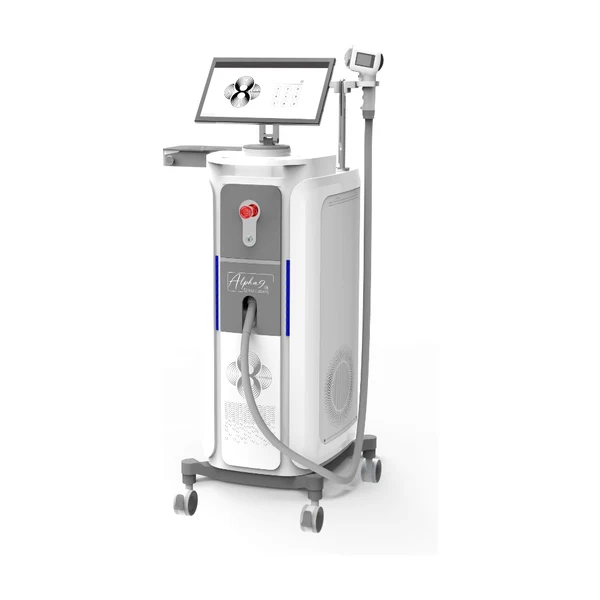
Laser cooling systems: why they matter for comfort
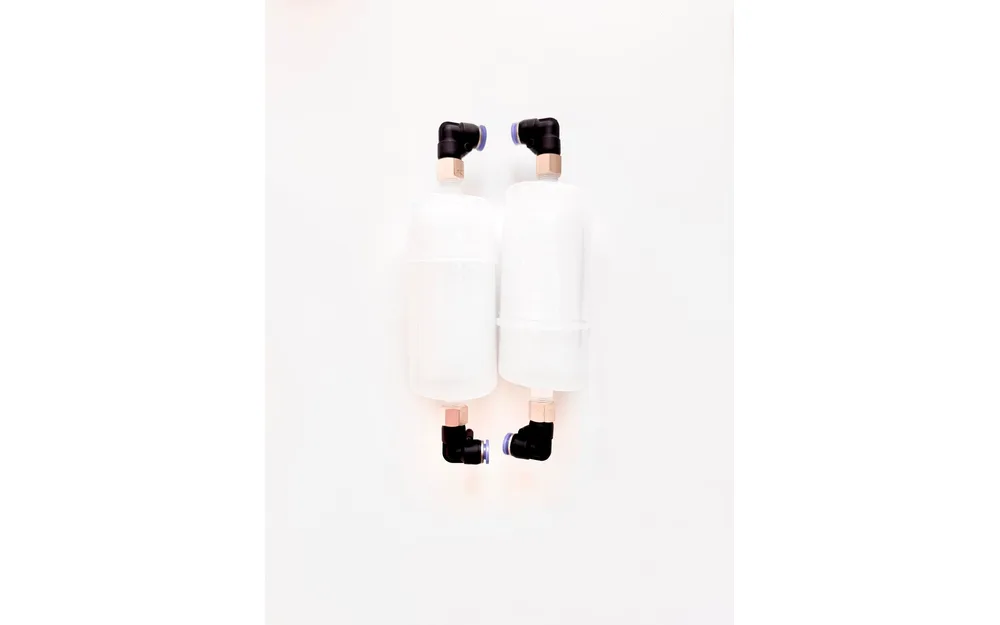
When laser hair removal comes up, attention usually goes to the laser: the wavelength, the power, the handpieces. But there is a system that works quietly during every pulse and decides whether a client leaves satisfied or never comes back. It is the cooling system — and in this article we explain why it deserves no less attention than the laser itself, both when choosing equipment and when maintaining it day to day.
Why cooling is needed at all
The principle of laser hair removal is simple: the melanin in the hair absorbs light energy, the energy becomes heat, and the heat acts on the follicle. But some of that energy inevitably reaches the surface of the skin too — the beam passes through the skin first, after all. Without cooling that would mean an unpleasant sensation of heat and a risk of overheating.
The cooling system solves the problem at its root: the contact surface of the handpiece actively chills the skin during the treatment, so the surface stays protected while the heat concentrates where it is needed — in the follicle. The result: the client feels only brief flicks of warmth, and the practitioner can work at effective settings without worrying about how the skin will react.
Sapphire contact cooling — how it works
Our hair removal lasers use sapphire contact cooling technology. Sapphire crystal has exceptional thermal conductivity — it draws heat away instantly from the skin it touches. The sapphire window in the handpiece is continuously chilled by the device's cooling circuit, so with every pulse the skin is in contact with a cool surface.
The practical effect is twofold:
- Comfort. The skin is cooled before the pulse, during it and after it — the client feels considerably less discomfort. We describe how that looks from the client's side in the article "What laser hair removal feels like: is it really painful?";
- Safety. A cooled skin surface is protected from overheating, so the practitioner can work at effective settings across a wider range of skin types.
What happens inside the device: the water circuit
To keep the sapphire window cold, a closed cooling circuit works inside the device: water circulates between the handpiece and a heat exchanger, continuously carrying heat away from the laser module and the handpiece. The condition of that circuit governs both the comfort of the treatment and the working life of the device itself — an overheated diode module ages faster.
So maintaining the cooling system is part of the daily routine:
- use the right water and change it on schedule, following the manufacturer's instructions;
- replace the water filter periodically — it protects the circuit from deposits;
- watch the temperature readings the device displays and act on warnings;
- keep ventilation around the device — it needs air to give up its heat.
We have set out the full maintenance routine — daily, weekly and periodic — in our maintenance checklist.
Cooling and gel: a team, not competitors
Contact cooling does not do away with the special treatment gel — they work together. Gel for laser treatments gives the handpiece even contact with the skin, improves the transmission of light and helps the handpiece glide, while adding to the cooling effect. Economising on gel is not worth it — uneven contact hurts both comfort and results. A dispenser and a smaller container for daily use make the work easier.
What to look at when choosing a device
If you are choosing equipment now, the cooling questions are worth putting to every supplier:
- What contact cooling technology is used, and is the cooling active throughout the whole pulse?
- How is the water circuit maintained, and what do the consumables cost?
- Does the device have overheating protection, and what should you do when a warning appears?
- How quickly does service respond if the cooling system needs repair?
These questions are part of the wider method for evaluating offers that we set out in the guide "How to compare different aesthetic equipment offers". The overall route to choosing a device is in the article "How to choose a professional hair removal laser".
Cooling as a business argument
A marketing note to finish. The comfort of a treatment is one of your strongest sales arguments: clients are afraid of pain, and that fear is what most often stops them deciding. A practice that can calmly explain how its device's cooling technology works gains a real advantage — and satisfied clients come back for the whole course and recommend you to friends. You will find this information in the descriptions on our device pages (CLens, for example) — use it in your own communication too.
Three levels of cooling: handpiece, circuit, room
When cooling comes up, practitioners often think only of the sapphire window in the handpiece — but the system actually works at three levels, and each of them matters:
- The handpiece. The sapphire window touches the skin and does the most visible job — the client's comfort. Its cleanliness and condition are checked daily;
- The circuit. The water system cools both the handpiece and the laser module itself — the device's working life depends on it. This is where the filter, the right water and a leak-free circuit do their work;
- The room. Ultimately the device gives its heat up to the air — if the room is hot and unventilated, the whole chain is working against itself. When planning a room, leave the device space to breathe and avoid placing it next to a radiator or in direct sun.
The weakest link sets the limits of the whole system: the best sapphire window will not help if the circuit has a clogged filter and the room is at 30 °C.
Warning signs: how to spot cooling that is failing
Cooling problems rarely arrive suddenly — they usually announce themselves in advance. Take notice if:
- clients start saying the treatment feels "hotter" than before — the first and most sensitive signal;
- the handpiece window is no longer as cold to the touch before a treatment;
- the device pauses more often or shows temperature warnings during intensive work;
- the sound of the pump or fans has changed.
Any of these is a reason to check the water level, the filter and the ventilation — and if you cannot find the cause, to call us. Ignored symptoms eventually become downtime, and downtime always costs more than prevention (more in our maintenance guide).
Summer: when cooling works hardest
Summer puts a double load on a hair removal practice: client flow is at its highest and room temperatures at their peak. A few practical rules for the hot season:
- arrange cooling for the room — it is an investment in both client comfort and the life of the device;
- leave the device a minute to breathe between treatments, especially after long sessions on large areas;
- service the circuit at the start of summer — check the water and the filter so the season starts clean;
- watch the warnings more closely than usual — in heat they appear sooner.
Gel: a small cost with a large effect
Treatment gel is the cheapest part of the cooling chain, but its role is disproportionately large: it fills the microscopic gaps between the window and the skin, so both cold and light are transmitted evenly. A few rules from practice:
- apply an adequate, even layer — economising shows immediately in what the client feels;
- use gel made specifically for laser treatments — its optical properties are matched to this work;
- for high volume a 10 l canister with a dispenser pays off, while a 1 l container on the trolley suits daily routine;
- wipe gel residue off the window after every client — that is part of daily maintenance.
Cooling and working speed: an unexpected connection
There is another reason the quality of cooling is a business parameter: it affects the pace of a treatment directly. With weak cooling the practitioner has to work more cautiously — lowering settings, pausing, asking the client "is that still bearable?". Every such pause lengthens the treatment, and a longer treatment means fewer clients in a day.
Good contact cooling lets you work in a smooth, uninterrupted rhythm at effective settings — so the same practitioner with a good device serves more clients in a day. Added up over a month, the quality of the cooling system turns into a very tangible sum of money — another reason it cannot be skipped when comparing offers.
How we check cooling before handing a device over
Every device we sell is checked at the factory, and during installation our technician checks the cooling circuit again in your own premises: filling the system with the right water, confirming there are no leaks, checking the temperature readings and showing you what healthy readings look like. That is exactly why the device must not be connected by yourself — a correctly commissioned cooling system is the foundation of a long working life and a condition of the warranty.
Clear maintenance instructions come with the device: what to check daily, and when to change the water and the filter. And if you are ever in doubt, telephone support is free for the first three months.
The essentials at a glance
- Cooling protects the skin and creates comfort — the main factor in clients coming back;
- The system works at three levels: sapphire window, water circuit, room — the weakest link sets the limit;
- Daily maintenance and a filter changed on time are the cheapest investment in the device's longevity;
- Failing cooling announces itself in advance — act on the symptoms;
- When choosing a device, the cooling questions are compulsory for every supplier.
Frequently asked questions
Do all diode lasers have contact cooling?
Not all of them, and not to the same standard — this is often exactly where cheap and professional devices part company. Before buying, always establish what technology is used and how it behaves in a real treatment; best of all, try it in person. You can do that at our studio in Kaunas by arrangement.
Can you keep working when the cooling system shows a warning?
No — a warning means the system is no longer doing its job, and working with an overheated device puts both the client and the equipment at risk. Stop treatments and contact us: telephone support is free for the first three months after delivery, and we provide service during and after the warranty period.
How often should the water filter be changed?
The interval depends on how intensively you work — you will get the recommendations during training and installation. The important thing is to keep a spare filter to hand so that replacing it never causes unplanned downtime.
Does cooling remove the sensation entirely?
The sensation remains — brief flicks of warmth are a normal part of the treatment. But good cooling reduces them to an easily tolerable level; there is more on that in our article for clients.
Does the cooling system use a lot of electricity?
The cooling circuit is an integral part of the device, and its energy use is already included in the device's overall consumption — there is no separate "cooling bill". What matters more is ventilating the room: the more easily the device sheds heat, the more efficiently and economically it works.
Does cooling matter for other aesthetic equipment too?
Yes — managing heat is a theme across all treatment technology: in tattoo removal lasers and in therapy devices, manufacturers are solving the same problem — directing energy at the target while protecting the surrounding tissue and the device itself. So the cooling questions you have learned to ask in this article will serve you when evaluating any professional device in our catalogue.
Planning an equipment purchase and want to see sapphire cooling in action? Book a visit to our studio in Kaunas, or compare the devices online. We will arrange a time by phone on +370 620 66666 — one treatment in the client's chair tells you more about cooling than ten specification tables.