
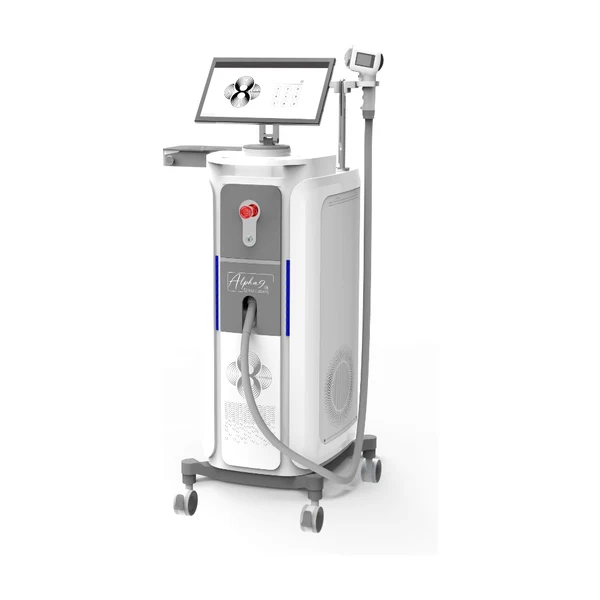
How laser hair removal feels: is it really painful?
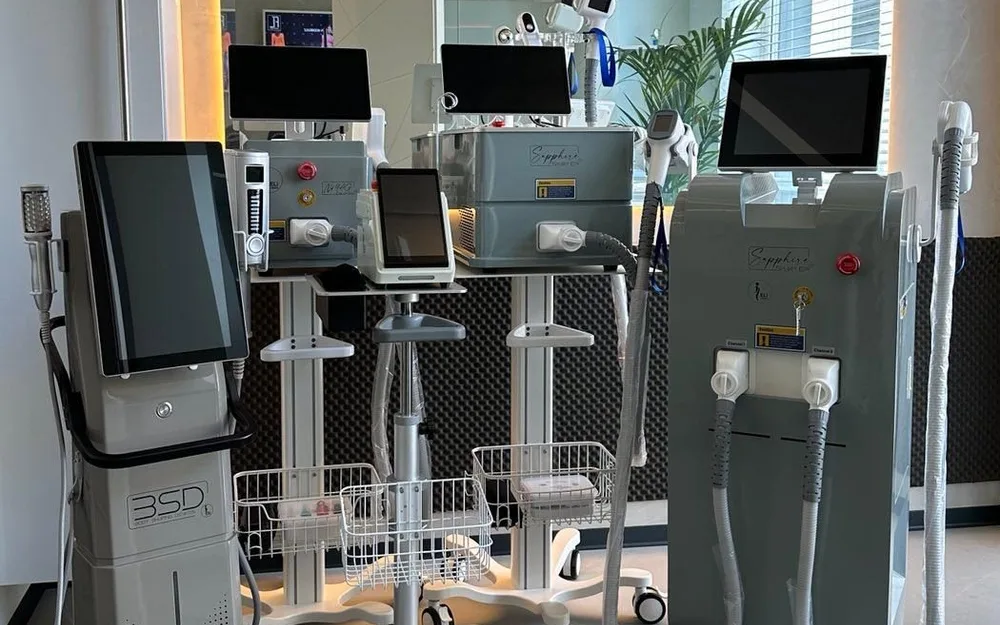
One of the questions we hear most often from clients is: "Is laser hair removal painful?" The fear of pain is understandable, but modern technology disproved that myth long ago. So what does the treatment actually feel like, and what does it depend on?
In this article we explain, in detail and openly, what you will feel during the treatment, what determines how intense the sensation is, and how your comfort is protected.
What do you actually feel during the treatment?
The best and most commonly used comparison for how a laser feels is a light flick of an elastic band against the skin. The sensation is momentary and felt only when the laser pulse acts on the hair follicle.
Along with the flick there is a feeling of warmth. It is worth stressing, though, that the SAPPHIRE SMART EPI lasers we work with have an advanced contact cooling system built in, which actively chills the surface of the skin throughout the treatment. Thanks to that technology the skin is protected from overheating and you feel only minimal discomfort. We have explained exactly how sapphire cooling works in a separate article on the laser cooling system.
What determines how intense the sensation is?
Sensation is an individual matter, but its intensity comes down to a few main factors:
- 1. Your individual pain threshold. What feels like a slight tingle to one person can be a sharper sensation for another.
- 2. The area being treated. Areas where the skin is thinner and more sensitive (the upper lip or the bikini area, for example) will feel more during the treatment than, say, the legs or the back.
- 3. The colour and thickness of the hair. The laser energy is absorbed by the pigment in the hair (melanin). The darker and thicker the hair, the more energy it absorbs, so the sensation can be a little more intense. The good news is that with every treatment the hairs become weaker and finer, so the sensation fades too.
- 4. The laser technology. This is one of the most important factors. Older generations of laser had no effective cooling systems, which made treatments far more painful. The technology we use, with its sapphire crystal tip, keeps the surface of the skin cool and protected.
A map of the areas: where it is more sensitive, and where you will barely notice
Clients often find it helps to know what to expect in each area — uncertainty is more frightening than the sensation itself:
| Area | What to expect |
|---|---|
| Legs, arms | One of the calmest areas — most clients describe only warmth |
| Underarms | More sensitive because the skin is thinner, but the area is small — the treatment takes only a few minutes |
| Bikini area | The most sensitive area, but short pulses and cooling keep the sensation easy to tolerate |
| Face (upper lip) | A brief tingle — the area is treated quickly |
| Back, chest | Calm areas, close to what the legs feel like |
It is also worth remembering how a course develops: the first treatment is the most sensitive, when the hairs are at their densest and thickest. With each later visit there are fewer hairs and they are finer — and the sensation fades with them.
How to reduce discomfort and get the best experience
For the treatment to go as smoothly as possible, it matters that you prepare properly and work with your practitioner.
- Proper preparation: shave the area carefully the day before. Do not use waxing or an epilator, because the laser needs the hair follicle to act on. Avoid sun exposure and sunbeds as well.
- Trust the technology: an effective cooling system is the key to comfort. It lets the practitioner work at effective laser settings while protecting your skin.
- Talk to your practitioner: if you feel too much discomfort during the treatment, always say so. The laser settings can be adjusted to make the treatment as pleasant as possible for you.
Your first treatment, step by step
To leave even less room for uncertainty, here is what a standard visit looks like:
- Consultation. The practitioner assesses your skin and hair type, discusses contraindications and answers your questions;
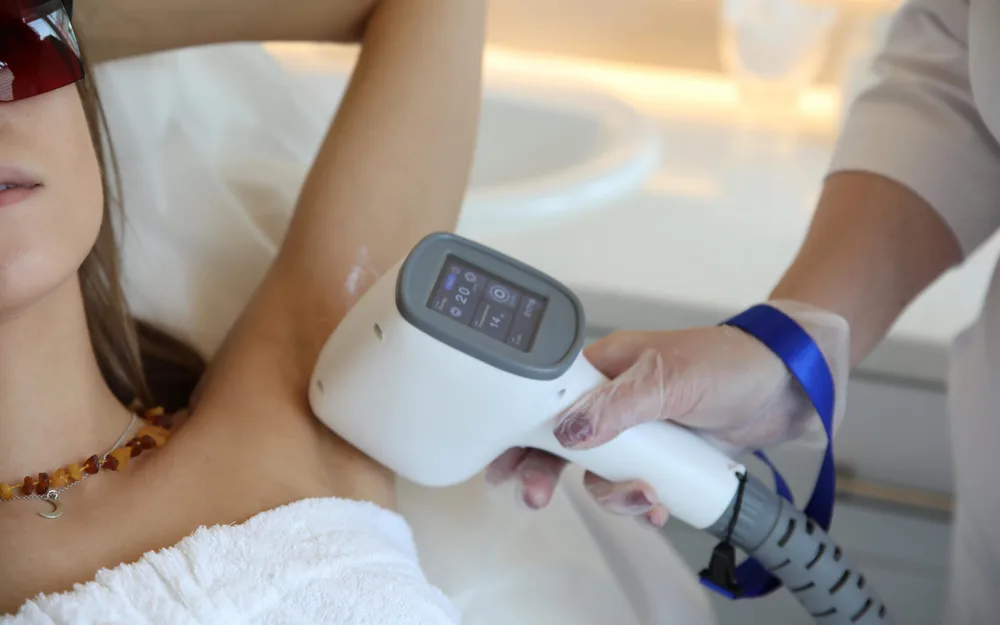
- Preparation. Protective goggles go on and a special cooling gel is applied to the skin to ensure even contact with the laser;
- The treatment. The practitioner works methodically across the area with the handpiece — depending on its size this takes from a few minutes to several tens of minutes;
- Finishing up. The gel is wiped off, the skin is soothed, and the practitioner reminds you of the aftercare rules and schedules your next visit.
How it feels afterwards
Immediately after the treatment the area may be slightly red or sensitive, similar to how skin feels after time in the sun. This is normal and usually passes within a few hours.
For the first few days afterwards we recommend avoiding direct sun, hot baths and intense exercise — your practitioner runs through all the recommendations after every visit.
Why different technologies mean different sensations
If you are comparing salons, pay attention to the technology they work with: what you feel with different generations and types of laser differs fundamentally. We look at this in depth in the articles "Alexandrite and diode lasers: which is less comfortable?" and "Diode vs alexandrite laser: what clients should know" — if you are deciding where to have your treatments, they will help you ask the right questions.
Conclusion: comfort and effectiveness are the reality of modern hair removal
Forget the myths about painful laser hair removal. Thanks to advanced technology, and above all to effective skin cooling, laser hair removal has become a comfortable and quick treatment. A light tingle and a feeling of warmth are all that most clients experience on the way to lastingly smooth skin.
Myths about the pain of laser hair removal
A fair number of myths circulate around the treatment, and they are more frightening than the reality. Let us clear up the most common ones:
- "The laser burns the skin." No — the energy is aimed at the hair follicle, while the surface of the skin is actively cooled by the sapphire window. Brief redness after the treatment is a normal reaction that passes within a few hours;
- "If it doesn't hurt, it isn't working." Pain is not a measure of effectiveness. Modern technology achieves its result precisely because the energy is controlled accurately — without unnecessary effect on the surrounding tissue;
- "The more powerful the device, the more it hurts." The opposite is true: a powerful professional device with good cooling works faster and more comfortably than a weak one without cooling;
- "All lasers are the same." What you feel with different generations of device differs dramatically — which is why it is worth asking what equipment a salon uses.
How it compares with other hair removal methods
When judging sensation, it helps to compare the laser with what most people have already experienced:
| Method | Sensation | How long the result lasts |
|---|---|---|
| Wax / sugar paste | Strong brief pain across the whole area | 2–4 weeks |
| Epilator | A drawn-out plucking sensation | 2–4 weeks |
| Shaving | Painless, but a daily routine | 1–3 days |
| Laser hair removal | Brief flicks of warmth, fading as the course goes on | A lasting result after the course |
It is a paradox, but waxing — which many people endure for years — is considerably more intense in terms of sensation than modern laser hair removal; it is just that everyone is used to it. Clients who have tried both usually wonder why they waited so long.
How it feels at different stages of the course
Another piece of good news: the course gets easier.
- Treatments 1–2: the hairs are at their densest and thickest, so the sensation is at its strongest. This is exactly the stage where good cooling technology matters most;
- Treatments 3–5: there are noticeably fewer hairs and they are finer — most clients describe the sensation as quite mild;
- Treatment 6 and beyond: only the few remaining hairs are treated — the sessions are short and barely noticeable.
It is worth knowing this pattern in advance: the hardest treatment (though really it is simply the unfamiliar one) is the first, and after that every visit is easier than the last.
Very nervous? A practical plan for the sensitive
If fear of pain is the main reason you keep putting the decision off, here is a gentle route:
- Start with a consultation, no treatment. Come in, see the room, ask everything you want to — with no obligation;
- Ask for a test pulse. A single pulse on a calm area (the shin, for example) tells you more in a few seconds than an hour of reading online;
- Choose an "easy" area for your first treatment. The shins or arms are the gentlest start; you can add the sensitive areas once you know how it feels;
- Agree on a brake. Knowing that you can say "pause" at any moment and have the settings adjusted takes away most of the tension;
- Give yourself three treatments. After the third there are already far fewer hairs, the sensation is milder, and the fear is usually just a memory.
The practitioner's role: why the same device feels different in different hands
The technology creates the possibility, but the person shapes the experience. A good practitioner works for your comfort throughout the treatment: choosing settings for your skin rather than "standard" ones, moving the handpiece at an even rhythm without erratic jumps, watching how you react and asking not as a formality but because they want to know. That is why, when we train the practitioners who will work with our equipment, we give managing comfort its own attention — from the right layer of gel to how you talk to a client during the treatment.
The practical conclusion when choosing a salon: ask not only "what device do you work with?" but also "who trained you?". Together, those two answers make up the experience you are going to have.
The essentials at a glance
- The reality is brief flicks of warmth, not pain: sapphire cooling works throughout the treatment;
- The first treatment is the most sensitive; after that the course only gets easier;
- Waxing, which many endure for years, is more intense in sensation than a modern laser;
- Preparation (shaving, sun discipline, staying calm) is your own contribution to comfort;
- Nervous? Start with a test pulse — book a consultation.
Frequently asked questions
Can numbing creams be used?
With modern cooling technology they are usually not needed — contact cooling fills that role naturally. If you are particularly sensitive, discuss it with your practitioner during the consultation.
Is the treatment suitable for sensitive skin?
The practitioner chooses the settings individually for each client according to their skin type — that is exactly what the consultation before the first treatment is for. Sensitive skin is not an obstacle, only a reason to choose the settings more carefully.
Where can I try the treatment?
At our Eli Lasers studio in Kaunas, treatments are carried out by an experienced practitioner using the same SAPPHIRE SMART EPI equipment we supply to salons. Book a visit.
I am a practitioner — where can I learn more about the equipment?
Browse our catalogue of hair removal lasers, or start with the guide "How to choose a professional hair removal laser" — your clients' comfort is a business argument too.
Does the sensation get stronger as the settings are raised during the course?
The practitioner adjusts the settings according to the state of the hair, and in later treatments they often are higher — but by then there are far fewer hairs and they are finer, so the overall sensation still fades. In practice clients describe later treatments as easier even though the device is technically working harder — more evidence that what you feel is decided by the whole picture, not by one number on a screen.
Have more questions, or would you like a personal consultation? Get in touch — we will gladly answer and help you feel confident. You will find us in Kaunas, Puodžių g. 10-4 — book by phone on +370 620 66666, and read more answers about the treatments in our knowledge centre. Take that first step: as you can see, the biggest part of the treatment is simply knowing what to expect.