
Alexandrite and diode lasers: which is less comfortable?
When choosing a hair removal laser, one of the most important criteria is the client's comfort. The two most popular technologies on the market are alexandrite and diode lasers. Both are effective, but what the treatment feels like can differ considerably. So which laser hurts more, and why?
The short answer: yes, but it matters why
Most of the time, yes — the alexandrite laser is considered more painful than a modern diode laser. But that is not simply a matter of opinion. Behind the difference in sensation lie clear physical and technological differences that are worth understanding.
The differences that decide how it feels
Two things govern the level of discomfort during a treatment: the laser's wavelength and its cooling technology.
1. Wavelength: how the energy is absorbed, and how deep it goes
The wavelength of the laser beam (measured in nanometres, nm) determines how deep the energy penetrates the skin and how strongly it is absorbed by melanin, the pigment in the hair.
- Alexandrite laser (755 nm): this laser uses a shorter wavelength. It is absorbed extremely intensely by melanin in the surface of the skin and in the hair itself. That sudden, concentrated absorption of energy produces a sharp, hot, brief sensation that many people describe as strong and painful.
- Diode laser (808 nm and above): modern diode lasers use a longer wavelength (often combining several, for example 755+808+1064 nm). A longer wavelength penetrates deeper into the skin, reaching the hair follicle, while acting less aggressively on the melanin at the surface. The energy is distributed more evenly, so the sensation is gentler — more like deep warmth than a sharp sting.
If you want to understand what these numbers mean in more depth, read our detailed guide "755 nm, 808 nm and 1064 nm: how do laser wavelengths differ?".
2. Cooling technology: the key to comfort
Cooling is essential to protect the skin and reduce discomfort.
- Alexandrite lasers often use a dynamic cooling device (DCD), which sprays the skin with a cryogen aerosol immediately before the laser pulse. It is effective, but the spray and the laser flash are two separate events.
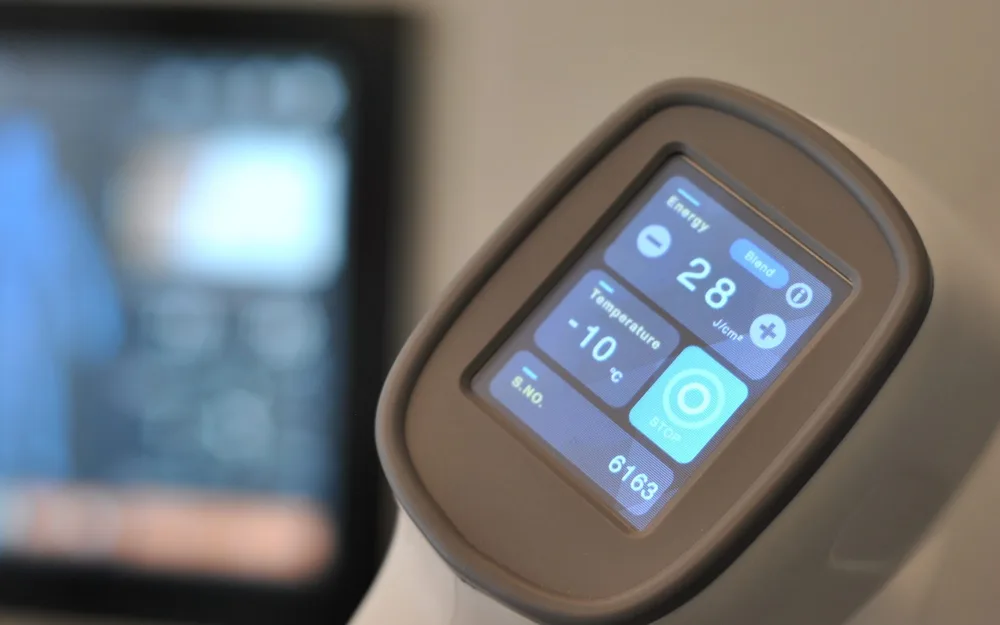
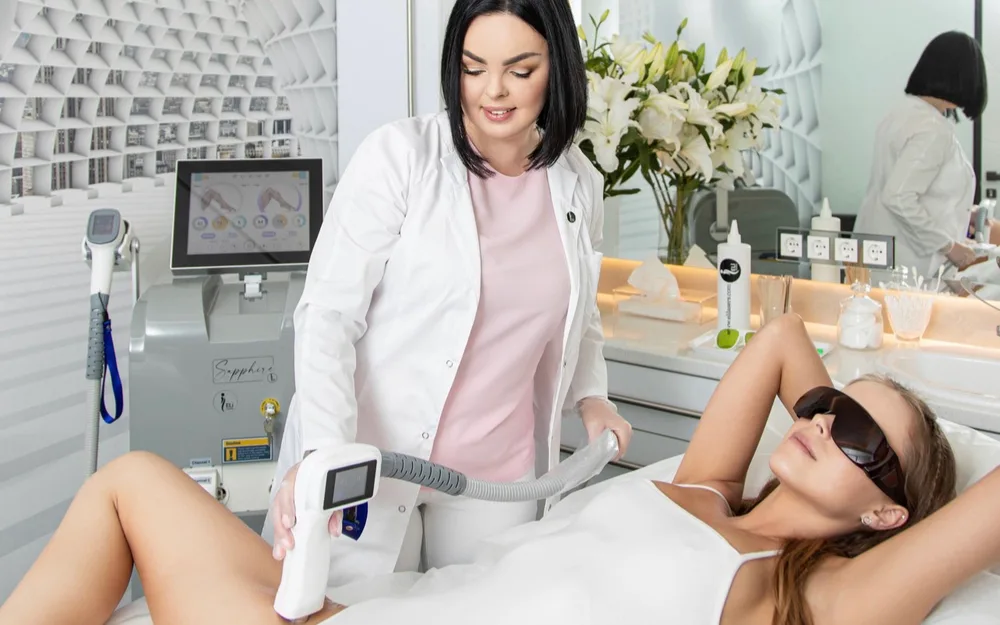
- The diode lasers we work with have an integrated contact cooling system. The handpiece with its sapphire crystal is continuously cold throughout the whole process. That means the skin is cooled before the pulse, during it and after it. This continuous contact cooling acts as an anaesthetic and is far more effective at keeping you comfortable.
We have explained in detail how sapphire cooling works, and why it matters for safety and not only for comfort, in our article on the laser cooling system.
Versatility and safety
Because it acts so aggressively on surface melanin, the alexandrite laser is most effective on light skin with dark hair, while using it on darker skin phototypes carries considerably more risk (a greater chance of burns and pigmentation changes).
Modern three-wavelength diode lasers, by contrast, are more versatile and safer across a wider range of skin types — from very light to darker skin.
What clients report: sensation by area
Whatever the technology, sensation varies by body area: legs and arms are the calmest, underarms and the bikini area more sensitive because the skin is thinner. The difference is that with good contact cooling even the most sensitive areas remain easy to tolerate, whereas with a more aggressive technology those are precisely the areas that become an ordeal. You will find a full map of the areas and preparation advice in the article "What laser hair removal feels like: is it really painful?".
It is also worth knowing how a course develops: the first treatment is always the most sensitive, because the hairs are at their thickest. They get finer with every visit, so later treatments become steadily more comfortable — a natural incentive to finish the whole course.
How to prepare so that discomfort stays minimal
- Shave the area the day before — do not use wax or an epilator, the laser needs the follicle;
- Avoid active sun exposure and sunbeds for a few weeks before and after the treatment;
- Arrive without rushing — a tense body feels everything more strongly;
- Talk to your practitioner during the treatment — the settings can always be adjusted for your comfort.
Conclusion: modern technology decides the comfort
Both technologies can achieve good results, but the answer on pain is clear. Because of its shorter wavelength and less advanced cooling system, the alexandrite laser is the more painful of the two.
Modern diode lasers, especially those using combined wavelengths and integrated contact cooling, offer a way of removing hair that is not only effective but considerably more comfortable and safer.
"Painful" does not mean "effective": the biggest myth
One of the most persistent beliefs is that stronger sensations mean a better result: "if it hurts, it must be working." Technically that is untrue. The result is determined by the amount of energy reaching the hair follicle; the pain is caused by energy that settles on the surface of the skin and irritates the nerve endings. In an ideal treatment those two things are separated: the follicle gets its dose, and the surface stays protected by cooling.
In other words, a more painful treatment often means not a stronger effect on the follicle but simply poorer protection of the surface. Modern technology makes it possible to work at effective settings without suffering — and that is exactly what progress here amounts to.
How sensation develops after the treatment
The question of discomfort covers not only the treatment itself but what happens afterwards. Here too the technologies differ:
- Immediately afterwards: a normal reaction is slight redness and a feeling of warmth, similar to having been in the sun. With good contact cooling it passes within a few hours;
- For the first 24 hours: avoid hot baths, saunas, intense exercise and direct sun;
- In the days that follow: the skin carries on as usual; the treated hairs fall out within one to three weeks.
If redness persists for a long time or discomfort appears after the treatment, that is a signal that the settings or the protection were chosen badly. In a good salon such situations should not arise.
How to choose a salon if comfort matters to you
To put it practically — before you book, ask:
- "What device do you work with?" An answer of "a diode laser with sapphire contact cooling" is a good sign; a vague answer is a reason to keep asking;
- "How is the skin cooled during the treatment?" Continuous contact cooling is superior to intermittent cooling;
- "Can I have a test pulse?" Professionals are happy to let you feel the treatment on a small area before you buy a course;
- "What happens if the treatment is too intense for me?" The right answer: the settings are adjusted to you — not the other way round.
More questions to ask a salon, and advice on planning a whole course, are in the article "Diode vs alexandrite laser: what clients should know".
Sensation by area: where the difference between technologies shows most
The difference between the technologies is not felt equally everywhere. On large areas with thicker skin (legs, arms, back) even an older technology is bearable — there the difference is more a matter of "comfortable / uncomfortable". In sensitive areas, though, the technology becomes decisive:
- Bikini area and underarms — thin skin and dense, strong hair: without continuous contact cooling these areas become a real ordeal, while with it they are merely a more intense sensation of warmth;
- Facial areas — close to nerve endings, so precise control of the energy and a cold sapphire window are felt here more than anywhere;
- The front of the shins, the knees — places where bone is close to the surface are more sensitive than soft areas.
That is why clients who have changed salon (and technology) usually describe the difference in terms of the sensitive areas: "the bikini area is finally not an ordeal".
Preparation changes the sensation more than you would think
Part of the discomfort depends not on the device but on preparation — good news, because that part is in your hands:
- A clean shave the day before — leftover long hairs heat up above the skin and create unnecessary burning;
- No wax or epilator between treatments — a plucked hair leaves the laser without a target, and the course without a result;
- Sun discipline — a fresh tan intensifies the sensation; plan responsible sun protection for the whole course;
- Moisturised, healthy skin — dry, irritated skin is more sensitive; daily care between visits works in favour of your comfort;
- Calm — arrive without rushing: a tense body turns up the volume on every sensation.
The essentials at a glance
- Because of its strong absorption at the surface, the alexandrite laser (755 nm) is usually more painful than a modern diode laser;
- Continuous sapphire contact cooling is the single biggest comfort factor;
- "Painful" does not mean "effective": a good treatment separates the effect on the follicle from the sensation at the surface;
- The difference is clearest in sensitive areas — the bikini area, underarms and face;
- Before booking, ask the salon about the device and the cooling — or try it with us.
Frequently asked questions
Does the pain depend on the salon or on the technology?
On both: the technology sets the limits, and the practitioner's skill decides how close to the comfort limit the work is done. So when choosing a salon, ask about the device and about the practitioner's training. The full list of questions is in the article "What clients should know".
Can the treatment be stopped if it is too painful?
Of course — you are always in control. But with a modern diode device that situation practically does not arise: the settings are adjusted on the spot and the treatment continues comfortably.
Where can I try comfortable diode hair removal?
At our studio in Kaunas — treatments are carried out by an experienced practitioner. Book a visit in advance.
I am a practitioner — what do these differences look like from a business point of view?
Client comfort directly affects repeat visits and referrals, which makes it one of the weightiest arguments when choosing a technology. You will find an analysis of the business criteria in our article for professionals, and our diode devices in the catalogue.
Are numbing creams compatible with the treatment?
With modern contact cooling they are usually not needed — the sapphire window does that job naturally and without acting on the skin. If you are considering numbing anyway, discuss it with your practitioner before the treatment: some products affect how the skin reacts and must be used responsibly.
Does discomfort depend on the monthly cycle or the time of day?
Individual sensitivity fluctuates — some clients notice that their skin is more sensitive on certain days. If you know your own rhythm, choose your appointment accordingly; and if the treatment falls on a more sensitive day, simply say so and the settings will be adapted.
Does it feel different for men and women?
The pain threshold is individual and does not depend directly on sex, but men's hair is usually thicker — it absorbs more energy, so the first treatments can be felt more distinctly. That makes good cooling even more important: it is in those more sensitive first treatments that the difference between technologies shows most clearly, and after that the course gets easier regardless of sex.
Would you like to see the advantages of modern diode laser technology for yourself? Get in touch for a full consultation or a demonstration of the device. Demonstrations take place at our studio in Kaunas, Puodžių g. 10-4 — we will arrange a time by phone on +370 620 66666 so that you can see and feel everything with no obligation. If it suits you better, leave an enquiry on the site and we will contact you at a time that works for you. The consultation is free, and the decision is always entirely yours.