
What does it cost to start a laser hair removal business?
Laser hair removal is one of the most in-demand services in the beauty industry, and its business model is attractive because most of the investment is one-off: once you own a good device, the cost of each treatment becomes very small. But what does starting up actually cost? In this article we set out every line of expenditure — from equipment to marketing — so that you can build a realistic budget with no surprises.
One important note up front: the figures here are indicative and depend on your city, your premises and the equipment you choose. You can always work out your own precise numbers with our payback calculator, or discuss them during a free consultation.
The largest line: a professional laser
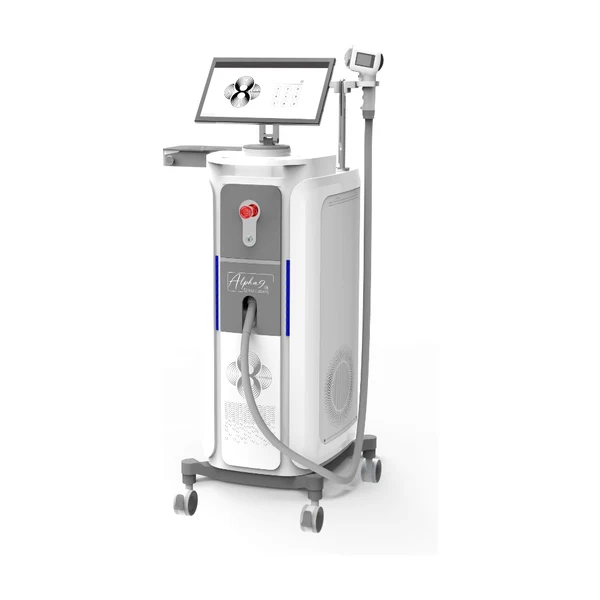
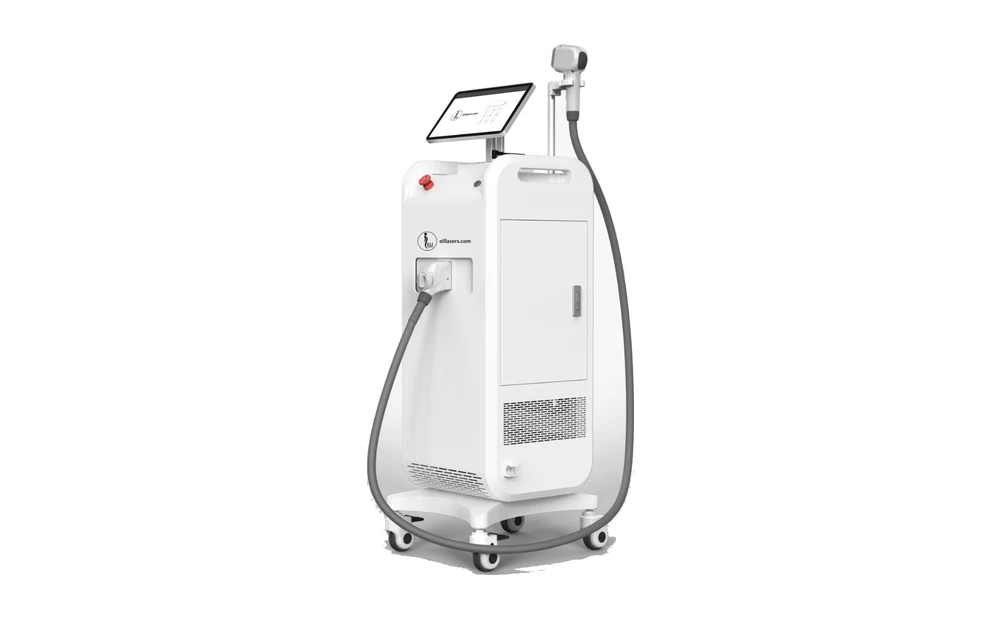
The equipment is the main start-up investment. Professional diode lasers in our catalogue currently cost:
| Device | Intended for | Price incl. VAT |
|---|---|---|
| Portable DI | A compact start, mobile services | €8,800 |
| Laser with built-in AI | The latest generation, with an AI camera | €11,210 |
| CLens — two diode lasers | Intensive salon work, the highest throughput | €14,800 |
What matters is not only the price but what is included in it. With us the device comes with individual training at no extra charge, professional installation in your own space and three months of free telephone support — bought elsewhere, those can all become additional costs. We explain how to compare offers properly in a separate guide.
Premises and preparing them
A laser hair removal room does not need a large floor area — a tidy, well-ventilated room with a couch and space for the device is enough. The real cost lines are:
- Rent. In smaller towns a room can be rented for a few hundred euros a month; in city centres it costs more. Many people start by renting a room inside an existing beauty salon — that saves money and brings the salon's client flow with it.
- Fitting out. A couch, a practitioner's chair, cabinets, lighting, curtains — €1,000–2,000 is a realistic starting figure.
- Electrical supply. A professional device needs reliable wiring — we discuss this before installation so that everything is ready when the technician arrives.
Consumables and their monthly budget
Daily work needs consumables, and they make up most of the cost per treatment. You will find them all in our accessories and consumables catalogue:
- Special gel for laser treatments — a 10 l canister (€60) lasts roughly a month at high volume;
- Water filter for the diode laser — replaced periodically, it protects the cooling system (€121);
- Protective goggles for practitioner and client — a one-off investment;
- Single-use items: razors, gloves, spatulas — around €50–80 a month;
- Disinfection and hygiene — products for hands and surfaces.
All told, budgeting around €100–150 a month for consumables is realistic at moderate volume. Set against treatment income that is only a few per cent of turnover — which is exactly why the margins in laser hair removal are so attractive.
Training and qualification
When you buy a device from us, individual training is included in the price: one intensive day (theory plus hands-on practice with a model you bring), an international certificate and all the course materials. If you would like to train before deciding on a device, the course costs €800, and that fee is refunded if you buy a device within a month of the training. Training an additional member of staff costs €400.
We cover what else is worth knowing about getting ready to work in the article "What training do you need before working with a laser?".
Marketing: how to attract your first clients
For the launch we recommend setting aside at least €300–500 for the first months' marketing:
- Social media — the main channel for beauty services; consistent content matters more here than a large budget;
- Local advertising and partnerships with nearby salons and gyms;
- Introductory offers for first-time clients — laser hair removal is a course-based service, so a client who comes once usually returns six to ten times;
- In time, a simple website with booking and reviews.
The summary: how much do you need in total?
A consolidated start-up budget for a new practice:
| Line | Indicative amount |
|---|---|
| Professional diode laser (with training and installation) | €8,800 – 14,800 |
| Fitting out the room | €1,000 – 2,000 |
| Consumables to start with | €200 – 300 |
| Marketing for the first months | €300 – 500 |
| Working capital (rent, reserve) | €1,000 – 2,000 |
A realistic launch with a portable device fits into roughly €11,000–13,000, while a fully equipped room with the flagship comes to around €17,000–19,000. These are indicative figures — yours may differ.
How to launch without tying up the whole amount
The largest part of the investment — the device — can be financed by companies registered in Lithuania: the application is completed online through the Bigbank platform and the instalments are paid out of operating income. In that case all you really need to launch is the budget for premises, consumables and marketing, and the device earns its own keep. How quickly is something we calculate in our article on equipment payback.
The monthly budget: what a working practice costs
The start-up budget is only half the picture. To complete the plan, set out your monthly operating budget too. The typical lines are:
- Fixed costs: rent and utilities, accounting, a booking system or calendar app, insurance — these do not change with the number of clients;
- Variable costs: gel, single-use items, laundry — they grow in proportion to the number of treatments but stay a small share of turnover;
- Marketing: a standing monthly budget for social media and promotions — a planned line, not "whatever is left over";
- The financing instalment: if you are buying the device on credit, include it here and watch that the margin after the instalment stays positive;
- A reserve: it is good practice to set aside a small amount each month for the unexpected and for future upgrades.
This list is your "monthly costs" field in the payback calculator: the more honestly you fill it in, the more reliable the payback figure will be.
Pricing: how to set your treatment prices
Prices are dictated by your city and competitive environment, so instead of universal numbers, here is a method:
- Research the market. Collect the price lists of five to eight nearby salons for the main areas (underarms, legs, bikini) — that is your corridor;
- Position yourself deliberately. A new practice with modern equipment does not have to be the cheapest — a comfortable treatment with sapphire cooling is an argument for the middle or upper part of the corridor;
- Build packages. Pricing courses of six to ten treatments with a discount for commitment improves cash flow and reduces drop-out mid-course;
- Recalculate the margin. For every price, check what is left after variable costs and the cost of your time. A full diary at low prices is a trap, which we discuss in the payback article.
A 90-day launch plan
- Days 1–30: contract and order for the device, preparing the premises, training, opening your social media accounts and building content before you open;
- Days 31–60: delivery and installation, first clients (friends, models, introductory prices), collecting reviews, settling your booking flow;
- Days 61–90: full prices for new clients, selling courses to returning ones, your first review of marketing results and a budget correction.
After 90 days you will have your own real numbers — and that is the moment to go back to the calculator and update the payback forecast with facts rather than assumptions.
Hidden costs that never appear in a pretty budget
So that the launch holds no surprises, include the lines beginners most often forget:
- Registering the business. Self-employment or a company, an accountant's advice, questions about a till or bookkeeping software — the amounts are small but they take time;
- Adapting the premises. Checking the electrical supply, extra ventilation, a sink in the hygiene area — it depends on the state of the particular room;
- Visual identity. A logo, a sign, a designed price list — you can start modestly, but not with nothing at all;
- Insurance. Public liability insurance for the business — worth looking at offers before you launch;
- Your own time. The first months will take many unpaid hours — for marketing, administration and learning. That is an investment too, just an invisible one.
None of these lines is a reason to postpone the launch — but all of them belong in the plan, so that they do not eat your working capital reserve.
Launch alone, or look for a partner?
Some people starting out consider sharing the investment with a partner. Both routes work; what matters is understanding the logic of each. Going it alone means full control and the whole margin for yourself, with the risk managed through financing — the instalment on the device is paid out of income, so the starting capital can be quite small. A partnership (with an existing beauty salon, for example) reduces rent and marketing costs and brings client flow immediately, but part of the income goes to the partner — and the essential thing is to put the terms in writing before you start: who buys the equipment, how the income is split, and what happens if the arrangement ends.
In our experience both models work well. If you are unsure which suits you, let us discuss it in a consultation — we can tell you how clients in a similar position put their own launch together.
Frequently asked questions
Can I start working alone, without a team?
Yes — most practices launch with a single practitioner. The one-day individual training is designed for one or two people, so you can train alongside a future colleague.
Are special licences needed for the premises?
Requirements for premises and for the activity depend on the nature of the services you offer — it is worth checking them with your municipality and public health authority before fitting out the room. During a consultation we will share practical experience of how our clients get through this stage.
Which device should I start with if I am unsure?
Use the comparison table, or answer a few questions in the selection guide. The general rule: for a limited budget and mobility, Portable DI; for a growing practice, the AI model; for high volume, CLens.
When will the business reach full capacity?
That depends on marketing and location, but the course-based nature of the service works in your favour: every new client represents six to ten future visits. With consistent work, the diary fills up over the first six months.
Can I start while holding another job?
Yes — some of our clients began exactly that way: treatments in the evenings and at weekends while their main job covered their personal expenses. That model reduces the pressure of the first months and lets the diary grow naturally. The only thing to plan realistically is time for marketing — client flow does not appear by itself, and it needs consistent attention even on a part-time schedule.
Would you like a specific budget for your city and your plan? Get in touch — we will help you build the launch step by step, from choosing a device to your first clients. The consultation is free and carries no obligation; one conversation often saves weeks of calculating alone and helps you avoid the most expensive start-up mistakes. Your business story begins not with a budget but with the first brave step — and we will take care of every step after that together with you.