
Electrolysis and laser hair removal: when you need both
Laser hair removal and electrolysis are often presented as competitors — as though a practice had to choose one or the other. Our experience says otherwise: they are not competitors but partners, and it is their combination that lets you offer the client what they actually want — a final result. In this article we explain how the two technologies differ, why they complement each other, and when it is worth a practice investing in both.
How each technology works
Laser hair removal: speed over large areas
A laser works through melanin — the dark pigment in the hair, which absorbs light energy and passes heat to the follicle. That lets a single pulse act on many follicles and treat large areas quickly: legs, back, arms. We cover the physics of the technology in more detail in our article on laser wavelengths.
But that is also where the method's limit lies: if there is no pigment in the hair, the laser has no target. Light, grey, reddish and vellus hairs do not respond to laser hair removal — whatever the price or power of the device.
Electrolysis: precision down to the last hair
Electrolysis works on an entirely different principle: a fine probe is inserted into the follicle and acts on it with electrical energy directly — with no connection to pigment at all. So for electrolysis the colour of the hair does not matter: it works on light, grey and the very finest hairs. The price of that versatility is time: each follicle is treated individually, so the method is for small areas and finishing work rather than for a pair of legs.
Why they are stronger together: the "final result" formula
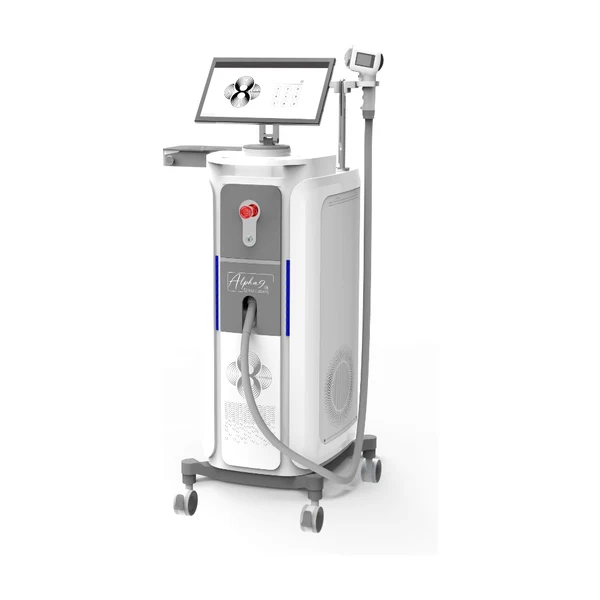
The typical client story goes like this: after a course of laser hair removal most of the hair is gone, but some stubborn hairs remain — light, fine, isolated. That is exactly what we described in our own company story: we have supplied diode lasers since 2018, and over time we realised that clients needed an answer for the hairs the laser cannot touch. That is how an electrolysis device came into our range — the one that finishes the job.
For a practice, that combination means a clear service pathway:
- Stage 1 — the laser: most of the dark hair over large areas is removed quickly and effectively;
- Stage 2 — electrolysis: the remaining light and isolated hairs are finished precisely;
- The result: the client gets what they came for — clear skin, not "almost clear".
When a laser alone is enough
The honest answer: for a launch, often it is. If you are just starting and your budget is limited, a good diode laser is the right first step: it serves the largest share of demand and generates income fastest (we work through the numbers in our article on payback). Plan electrolysis as a second stage of growth in that case — once you have a client base, some of them will naturally ask "what can be done about the hairs that are left?".
When it is worth having both technologies
- You already have a working hair removal practice. Your clients are already asking about light hairs — every "no, we don't do that" is a client walking to a competitor;
- You want to stand out in the market. "A complete result with two technologies" is a clear position and easy to communicate;
- You work on specific areas. For facial areas, the eyebrow line and isolated hairs, electrolysis is often the only effective answer;
- You want a larger average basket. Electrolysis sessions complement a laser course — income grows from the same clients, with no additional marketing.
SmartDEPI: what we offer for electrolysis
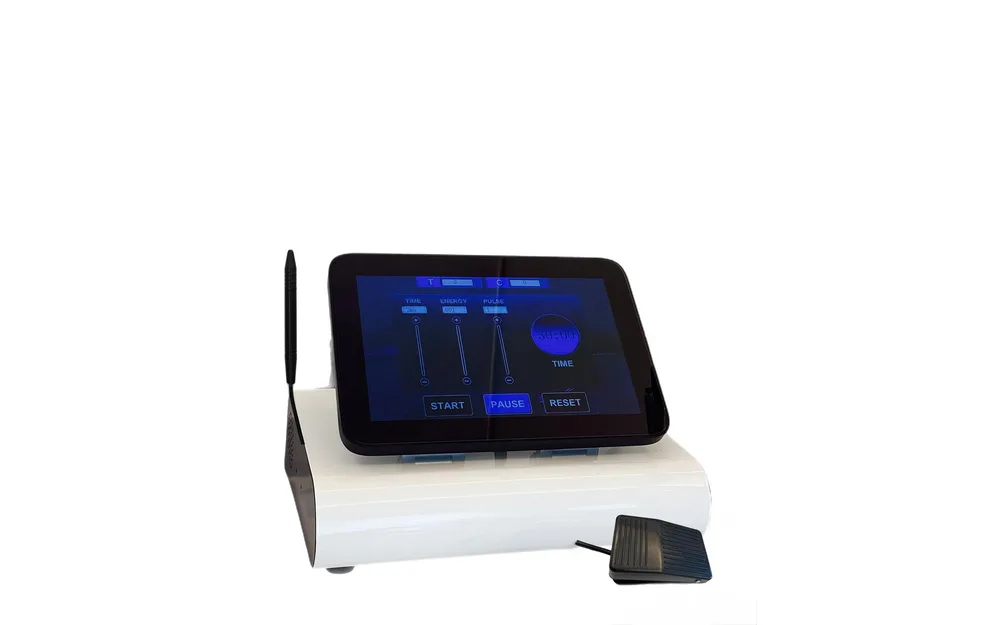
The SmartDEPI electrolysis device works at a high frequency of 27.12 MHz, meets the highest international standards and keeps a very competitive price (€3,800 incl. VAT, promotion applied). Like all our equipment, it is sold with individual training, installation and technical support.
Good probes are needed for the work too — we supply insulated electrolysis probes with a 24-carat gold coating: the insulated shaft directs the energy straight to the base of the follicle and protects the surface of the skin, while the hypoallergenic gold coating is intended for sensitive skin. The probes come in different sizes (K2 and K4) and pack sizes (10 or 50).
How to position both services in your pricing
Practical advice from our clients' experience:
- sell laser hair removal in courses (six to ten treatments) — it is a course-based service with predictable flow;
- price electrolysis by time (per 15, 30 or 60-minute session, for example) — that reflects the effort involved honestly;
- build a "finishing package": a laser course plus electrolysis sessions for the remaining hairs — that is what sells the promise of a final result;
- explain the difference simply in your communication: "the laser for areas, electrolysis for what is left". Clients grasp that immediately.
A client journey with two technologies: an example
How the two technologies combine into one service is best seen through a specific path:
- Visit 1 — consultation. The practitioner assesses the hair: mostly dark (work for the laser), some fine and light (electrolysis later). The client is shown the whole plan at once — which builds trust and clear expectations;
- Visits 2–7 — the laser course. Large areas are treated every few weeks; the density of hair falls each time;
- Visit 8 onwards — finishing with electrolysis. The remaining light and isolated hairs are removed one by one — the area is completed properly;
- Maintenance. The occasional stray hair is dealt with in short electrolysis sessions.
The client walks the whole path in one practice — at no stage do they have to find "another specialist for another problem".
The economics: what electrolysis adds to turnover
The SmartDEPI investment (€3,800) is several times smaller than a laser, and the income logic is different — an hourly rate rather than a per-treatment price. Work through your own scenario:
- set an hourly rate (or one per 15 or 30-minute session) to suit your market;
- estimate how many of your laser clients have a "finishing" need — in practice most of them do;
- multiply: even a few hours of electrolysis a week adds up to a solid annual sum, and that is entirely enough to pay for the device (the formula is the same as in the laser payback article, only the rate is hourly);
- add the retention effect: clients who get a complete result do not go back to competitors, and they bring friends.
You can work it out with the calculator, and for financing, the Bigbank application covers this device too (for companies registered in Lithuania).
Choosing probes: K2 or K4, packs of 10 or 50
The quality of electrolysis depends heavily on the probes. Our catalogue has insulated probes with a 24K gold coating in two sizes:
- K2 — a finer probe for finer hair and sensitive areas (10 / 50);
- K4 — for thicker, stronger hair (10 / 50).
To begin with it is convenient to keep a small pack of each size, and once you are established to move to packs of 50, which cost less per probe. The insulated shaft directs energy to the base of the follicle and protects the surface of the skin, while the gold coating suits sensitive skin — both worth mentioning to clients as well.
Hygiene and safety in electrolysis
Because the work involves a probe, the hygiene standard here is stricter still than in laser treatments: single-use gloves for every client, thorough disinfection of skin and hands, and proper accounting for and disposal of probes. All of that is a standard part of the training programme: the electrolysis course, like the laser one, is included in the price of the device.
How to introduce the new service to existing clients
Launching electrolysis has a rare advantage: your first clients are already sitting in your practice. The practical steps:
- Review your client base. Which of your laser course clients have light hairs left? They are the natural first candidates, and an offer will sound like care rather than a sales pitch;
- Bring it into the end-of-course conversation. As a laser course ends, discuss the result and show the path to completion — "we can finish the remaining hairs with electrolysis";
- Tell the story on social media. "Why we added a new service" — an honest account about light hairs works better than a promotion;
- Start with short sessions. Formats of 15–30 minutes let clients try the service without a large commitment.
Common mistakes when starting electrolysis
- Pricing it too low. This is meticulous manual work and the hourly price must reflect it; cheap electrolysis quickly becomes a service nobody enjoys providing;
- The wrong probe for the hair type. K2 and K4 are for different hair — choosing the size is part of quality;
- Rushing. Electrolysis has a different rhythm from the laser: schedule realistic session times so that neither quality nor your diary suffers;
- Unexplained expectations. The client must understand that this is the meticulous finishing stage — not "a fast laser under another name".
You will avoid all of these in the training, whose programme covers both technique and organising the service.
The essentials at a glance
- The laser works through pigment and covers large areas fast; electrolysis acts on each follicle directly — whatever the hair colour;
- Together they sell what the client actually wants: a final result;
- A laser is enough to launch; electrolysis is the natural second stage for a growing practice;
- The SmartDEPI investment is several times smaller than a laser, and the service is priced by the hour;
- Good insulated, gold-coated probes are a non-negotiable part of quality.
Frequently asked questions
Will electrolysis become obsolete as lasers improve?
No — this is a matter of physics, not of fashions in technology: as long as a laser works through pigment, unpigmented hair will remain its blind spot. Electrolysis is the only method that acts on the follicle directly, so its niche is stable.
Is electrolysis difficult to learn?
It is a skill that demands care, but the training follows the same principle as for the laser: individual, with theory and practice, and the course is included in the price of the device. More in our article on training.
Where should I start if I can only invest in one device?
With the laser — it covers the largest share of demand. The comparison table and the selection guide will help you choose, and you can plan electrolysis as a second stage.
Can both treatments be done for the same client at the same time?
The treatment plan is drawn up individually — usually electrolysis comes at a later stage of the course, once the laser has done its part. We discuss the specific sequences in the training.
How much room does a second device need?
Not much — SmartDEPI is a compact desktop unit that fits on a treatment trolley beside the couch. No separate room is needed: the two services coexist perfectly in one practice, and it is more convenient for the client, since the whole course takes place in the same familiar space. All the planning requires is somewhere to store probes and consumables in line with hygiene requirements.
Considering a second technology for your practice? Book a consultation — we will discuss your client flow and work out when an electrolysis device starts earning. You can see the device in person at our studio in Kaunas. And if you would like to see both technologies at work in one place, at that studio it is everyday practice rather than a demonstration.