
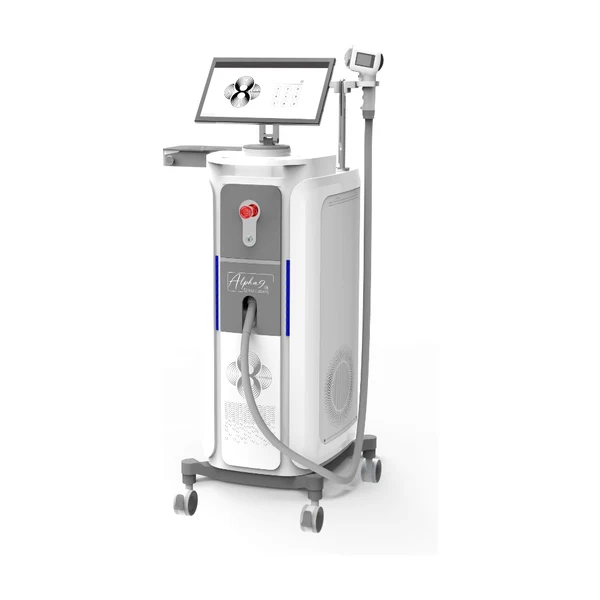
Hair removal lasers for professionals
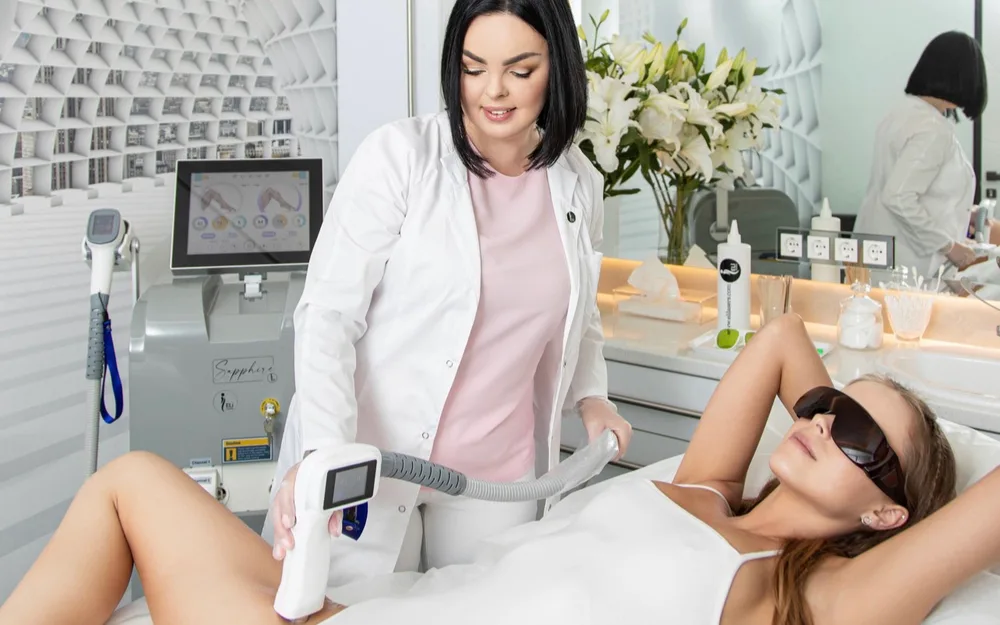
A hair removal laser for your salon
Laser hair removal is one of the most requested services in beauty salons and clinics, and a professional hair removal laser is at its core. Every device we supply is a diode laser with three wavelengths — 755, 808 and 1064 nm — so a single device covers a wider range of skin and hair types.
You will find all the diode hair removal lasers we offer — with prices and a side-by-side comparison — in the equipment catalogue.
Why choose our devices?
Three wavelengths: 755, 808 and 1064 nm in one device.
Cooling: a sapphire crystal tip chills to −10 °C, reducing discomfort and protecting the skin surface.
Training included: when you buy a device, individual training with a certificate costs nothing extra.
Financing: companies registered in Lithuania can buy devices in instalments.
A laser works through the pigment in the hair, so light, grey and very fine hair is better removed with electrolysis.
Everything you need to know about hair removal lasers: a professional's guide
In a beauty industry that values innovation and results above all, hair removal lasers have become the gold standard and an indispensable investment for every modern salon and aesthetic medicine clinic. It is not just equipment — it is a promise to your client of lastingly smooth skin, and to your business of steady income and a solid reputation.
In this detailed guide the "Elilasers" team, specialists in aesthetic equipment, shares everything you should know before buying a hair removal laser. Our aim is not only to sell equipment but to give you the knowledge to make the best decision.
What are professional hair removal lasers and how do they work?
A professional hair removal laser is a high-technology device that uses a concentrated beam of light to destroy the hair follicle. The process, called selective photothermolysis, works with great precision:
- Absorption of energy: light of a specific wavelength emitted by the laser is absorbed by melanin, the dark pigment in the hair's structure.
- Thermal effect: the absorbed light energy turns into heat.
- Destruction of the follicle: the heat reaches the hair follicle (the root) and destroys it, preventing future hair growth.
It is important to stress that the surrounding skin tissue, where the concentration of melanin is lower, is left undamaged. That is precisely why the treatment is safe and effective when carried out by a qualified practitioner using quality, certified equipment.
Types of laser technology: what you should know
There are several main types of laser on the market. The essential difference is the wavelength of the light emitted, which determines which skin and hair types the technology suits best.
- Diode lasers (808–810 nm): the versatile and most popular choice in clinics around the world. These hair removal lasers are considered the "gold standard" because their wavelength works effectively across a wide range of skin phototypes (I to IV on the Fitzpatrick scale) and hair of varying thickness. They offer an excellent balance of speed, safety and effectiveness.
- Alexandrite lasers (755 nm): particularly effective on light skin (phototypes I–III) and dark hair. Because of the shorter wavelength the energy is absorbed very well by melanin, so results come quickly. This technology is valued for its speed and comfort.
- Nd:YAG lasers (1064 nm): the longest wavelength, and the safest choice for dark or tanned skin (phototypes IV–VI). Because the beam penetrates deeper and is absorbed less by the melanin in the epidermis, the risk of burns is minimal.
Our recommendation: the most modern hair removal lasers often combine several technologies in one device (diode, alexandrite and Nd:YAG). That lets the practitioner choose an individual, safest and most effective protocol for each client, based on their skin and hair type, and so achieve the best possible results.
How do you choose the right laser for your salon? Practical advice
Investing in a hair removal laser is a serious step. For it to pay for itself and generate profit, assess these technical and practical aspects:
1. Power and fluence (energy density) adjustment: higher power lets you reach the follicle with the energy needed, but flexible fluence adjustment is essential for working safely with different skin types and sensitive areas.
2. Pulse duration: being able to change the pulse duration lets you adapt the treatment to fine and to thick hair. Short pulses suit fine, lighter hair; long pulses suit thick hair set deeper in the skin.
3. The cooling system: one of the most important elements of comfort and safety. An advanced contact cooling system (often called a "sapphire tip") chills the epidermis during the treatment, protects against burns and reduces painful sensations to a minimum. Ask what temperature the tip is cooled to.
4. Spot size: a larger handpiece window (for example 12×20 mm or more) lets you treat large areas such as the legs or the back more quickly. That saves your time and the client's, and increases your salon's throughput.
5. Reliability and service: choose a supplier that offers certified equipment — make sure the laser has all the required EU certificates (for example Medical CE); professional training — buying the equipment is only half the job, and proper theory and practice will let you work confidently and safely; and service in and out of warranty — fast, professional service in the event of a fault protects your business from downtime.
Frequently asked questions
How many treatments will my clients need?
On average 6–8 treatments, carried out every 4–8 weeks depending on the area being treated. It is important to explain to the client that the laser only acts on hair that is in the active growth (anagen) phase.
Is laser hair removal painful?
Thanks to modern cooling systems, most clients feel only a slight tingling or warmth. It is incomparably more comfortable than, for example, waxing.
What is the return on the investment?
Laser hair removal is one of the most profitable treatments in the beauty market. With high demand and sensible pricing, an investment in a quality hair removal laser pays for itself very quickly and then generates steady profit.
Can a laser remove light or grey hair?
The laser's effectiveness depends on how much melanin the hair contains. Since grey, white or very light hair has no pigment, the laser beam does not "see" it. The client should be told this during the consultation.
Get ready for the beauty standards of the future with Eli Lasers
We hope this guide has given you something useful. The Eli Lasers team is ready to become your reliable partner on the way to success. We offer not only the most advanced, certified hair removal lasers but also comprehensive support — from a thorough consultation and training to fast service.
Browse the full equipment catalogue or get in touch with us today.